
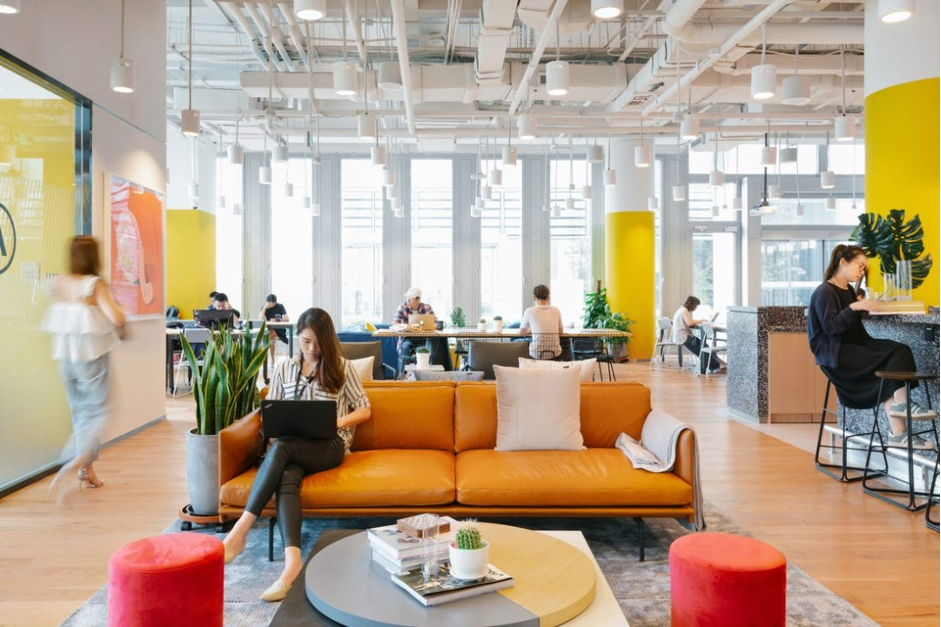
 Detail Director, Sunny Johal spoke alongside other experts in the property industry at a recent RIBAJ and PiP Office Development Seminar. He set out his thoughts on the future of offices and how demands on workplaces are set to change in the post-Covid-19 landscape.
Director of West Midlands based end-to-end property company Detail, Sunny has over 20 years industry experience. As a Project Director for Argent, Sunny led the delivery of some of Birmingham’s most desirable office space – One Chamberlain Square.
The virtual seminar took place in July and Sunny spoke alongside fellow property experts on the future of offices and working. He began by quoting “you can’t build a tribe purely on interests, you need a sense of place and belonging”.
Sunny posed the question of whether offices have merely replaced the factories of the past, or are they more than simply a place to work? Acknowledging the workplace’s roots following the industrial revolution, he explained how the rise of the internet and online communication has allowed us to do things electronically. It means workers do not necessarily need to be in the same place at once and allows us to reflect on the value and purpose of the office.
Covid has certainly become a catalyst for change. The pandemic has created the conditions for a ‘forced experiment’ and accelerated the trend towards greater home working. However, these trends were already developing with hot-desking and co-working spaces increasingly popular with freelancers and other small and mobile businesses.
Old fashioned models of clocking in and clocking out of the workplace have long been on the wane. Increasingly, workers want the ability to manage their own time and companies who are focused on outputs, not just inputs. Huge companies, including Twitter, Facebook, and Google have already committed to a work-from-home model in the future – empowering smaller businesses to follow suit.
Of course, working from home cannot replace an office environment in perpetuity and may negatively impact large groups of people. There are also inherent challenges around talent recruitment and career development – particularly for those just starting out in their careers.
Over time, working from home may well result in a ‘leaking out’ of company culture, collaboration, values, and the social activities which bind effective teams together.
Whilst Covid represents an immediate consideration for employers and workplaces. Longer-term trends will still influence future offices. Younger people, now joining the workforce, have different priorities and values to previous generations. They demand more of their employers, including consideration of climate change and the wider ethical stance of their employer. These values can only be truly expressed through the physical manifestation of a company – the office. Sunny also questioned whether the term ‘office’ will exist going forward, and would be overtaken by a more holistic term such as ‘Collaborations Hubs’.
The office is no longer simply a place to do work. Employers, developers and landlords must respond to these long-term trends – Covid has just accelerated them.
Sunny concluded: “I think we are in a time of opportunity, where we can create a new normal in workplace design. However, what will remain key, is that an organisation does have a nucleus, a place to call home, and somewhere its values can be expressed and shared.”
To view the seminar, please click here.


