
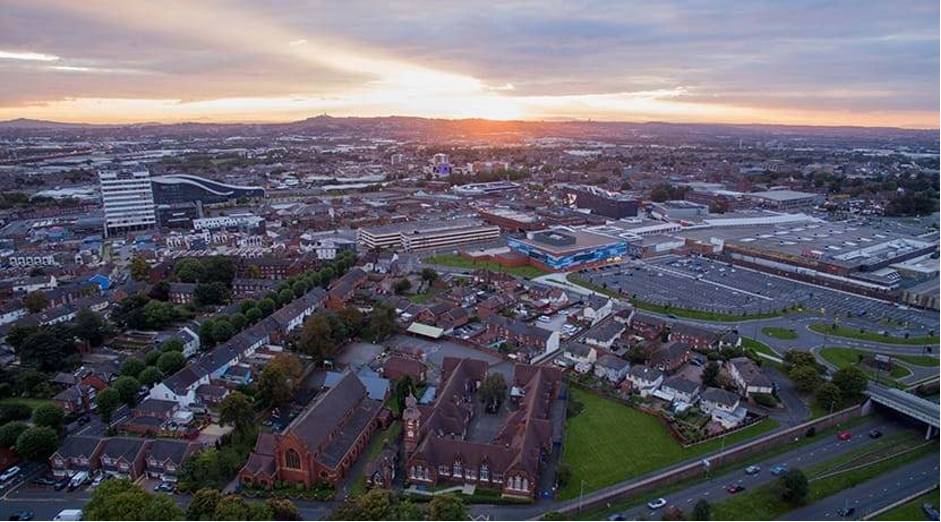
 Brownfield, or previously developed, land is often thought by politicians as the silver bullet which will meet all our development needs whilst protecting green spaces. Indeed, de-industrialisation has left many brownfield sites in our own region ripe for development and few disagree with this approach in principle.
Last year, 17,000 homes were built across the West Midlands, most of these were on brownfield sites. The Government is actively encouraging development on brownfield sites, as a core plank of the UK’s Sustainable Development Strategy. In many ways the strategy, as it relates to housing delivery, is working.
This offers the property industry a unique opportunity to develop well-thought-out, sustainable developments, that add vibrancy to our towns and cities. At Detail, we are actively delivering brownfield developments across the West Midlands, including Metro Lofts and Print Chambers in West Brom – developments which are at the heart of the community and will be assets for years to come.
Brownfield sites are usually close to existing infrastructure and positioned in town centre locations. In theory, they are in the areas people already wish to live, work, and spend time. Brownfield redevelopment also improves the environment, inside and out.
From a sustainability perspective, the environmental benefits to brownfield remediation are simple. But the improvement and protection of the environment through clean up and redevelopment also produce a myriad of secondary benefits:
- The impact on human health can be profound, with research showing a direct link from brownfield sites to a higher risk of disease.
- Removing volatile chemicals and soil contaminants would be a positive enough development, but when the site is then replaced with a sustainable building with a high-performance vapor intrusion system, for example, the building’s inhabitants may benefit from better indoor air quality than in many conventional construction projects on non-brownfield sites.
- Productive land use goes hand in hand with economic benefits: A healthier built environment contributes to higher productivity, delivering the economic benefits that come with it.
- The visual image of a brownfield property – blighted, abandoned, and depressed – associates in the mind with high-crime areas, which is only reinforced in popular culture.
Moreover, the job growth benefits to brownfield redevelopment do not stop at the labour force required to restore a site to a useful purpose. When a durable, sustainable construction project replaces an abandoned or under-used brownfield site, these projects create a path to provide jobs for many more years to come.
Redeveloping contaminated sites also increases property values, near and far. The untapped economic potential in brownfield sites has always been a powerful motivator for redevelopment – but the massive cost of assessment, clean up and remediation, in many cases, has kept the economic promise of brownfield sites locked up.
Government incentives have always sought to ease this burden. But now there is another way to reduce costs: the availability of newer, more cost-effective technologies are entering the market to protect new building projects from soil contaminants and VOCs. Usable land within urban footprints tends to be scarce; redeveloping and repurposing a site in an urban core can mean even greater property value or increased property lease rates for developers.
The re-use of tired, dilapidated, or abandoned urban spaces is an easy argument to win.
However, it has become too easy to link the development of brownfield land to the protection of the Green Belt or greenfield land – often many miles away. Often overlooked is the wider economic benefit of brownfield development, with politicians preferring to focus on the contribution to housing numbers.
For example, in the West Midlands, Andy Street has said: “councils should have a duty to approve development on brownfield sites first, with any proposals for Green Belt development blocked until they are the last possible option available.”
The problem, of course, is that this approach places unfair pressure on brownfield sites – with the onus on such sites to protect the ‘countryside’. However, in most cases it is impossible for them to deliver the same type of benefits as a comparable site in the Green Belt – and neither should they aspire to.
For example, the costs of remediating land for development in urban centres puts significant pressure on viability – such that affordable housing provision is always likely to be lower than a comparable site in the Green Belt.
Alternatively, brownfield sites can deliver fantastic public and cultural spaces which green field land often struggles to create, catering to younger demographics with different needs and aspirations. At Metro Lofts, for example, Detail is delivering co-working space as part of the integrated residential amenity.
Green and brown land is different, and that is OK.
By linking brownfield and greenfield sites in such a fundamental way we risk betraying the opportunity brownfield presents. By placing too much pressure to deliver the region’s housing numbers, provide affordable housing, family homes, student accommodation (the list goes on), we undermine the opportunity to create engaging and exciting spaces which renew our town centres in innovative and forward-thinking ways.
In 2019, the Campaign for the Protection of Rural England announced with great excitement that England’s brownfield land could deliver 1,000,000 new homes – thus protecting the country’s green spaces. Where then for the offices, shops, GP surgeries, cultural venues, public squares, and social infrastructure?
If we focus only on homes, we miss the real opportunity. It is time we had a balanced conversation about brownfield development, and how it can really benefit our communities and economy.


