
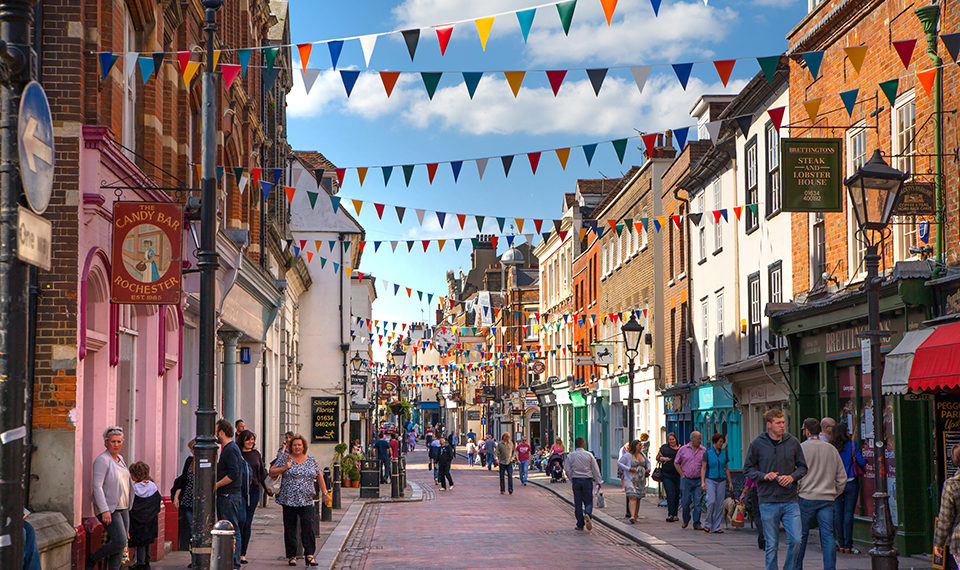
As we begin our transition back to normality, the future of our high streets is once again at the front of our minds.
Whilst many are concerned the pandemic is the final nail in the coffin of physical retail stores, as already demonstrated by the collapse of iconic chains such as Debenhams and the Arcadia Group, others argue there is cause for optimism.
After fifteen months of lockdowns and social distancing restrictions, we have all re-assessed what we value. Even as online shopping has boomed our freedom to browse our local high street remains an important British pastime.
Prior to the pandemic, our shopping behaviour was turning away from physical retail stores and towards the online marketplace, buoyed by cheaper prices, greater choice, and accessibility.
However, since the easing of social distancing measures and reopening of retail stores, many customers have eagerly returned to the high street, instilled with confidence, optimism, and healthier bank balances to enjoy the ‘high street experience’.
As a result of this re-emergence, the BRC-KPMG Sales Monitor has revealed that sales in physical retail stores have risen even above pre-pandemic levels, with an increase of 7.3% in April 2021 compared to April 2019.
With the possibility of further growth as restrictions continue to ease, there is hope that retail could enter a new era of consumer spending.
With a new-found appreciation of the high street by consumers, and awareness of the fragility of retail for both local businesses and national chains that make up the local tapestry, this new era promises real potential for the retail industry.
However, growth is fragile. While there has been growth in sales within bricks-and-mortar stores over the last few months, the long-term trend towards online sales continues.
What sets high streets apart from online competitors is the experience. Shoppers are lured not by price or availability, but for interaction, service, and community building. It is likely that larger retail chains will continue to find trading a challenge, whilst smaller independents, cafes, and bars enjoy a boom.
Of course, the UK economy is splurging after nearly six months of pent-up demand. The real test will be over the next 12-24 months.
The pandemic has given businesses the gift of time and resources – in the form of cheap, or even free, money. Many smaller businesses have used this to great effect, whether revamping tired shopfronts, or investing in new technology and innovations.
Through its programme of grants and loans the Government has invested an unprecedented amount in Britain’s high streets. Rather than bailing out banks, investment has been local, and community focussed.
After a decade of decline the excitement on the high street is palpable. Not just from shoppers, but shop keepers as well.
When our high streets do well, it filters up the chain. People are drawn to live in town centres, businesses open new offices, and there are new opportunities for growth and investment. This summer will be critical for us in the development industry.
If the high street performs well, the 2020’s could be a boom decade yet.


